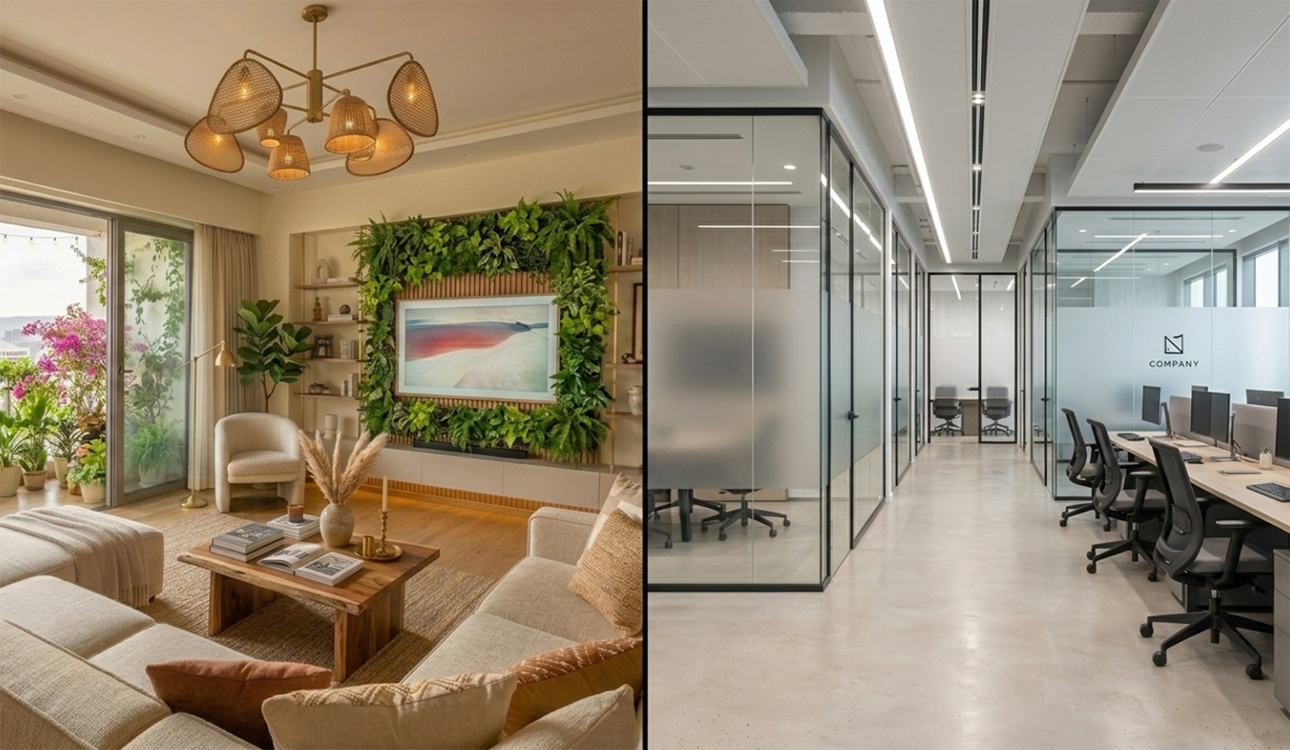
Interior design is often seen as a single profession, but residential and commercial interior design are two very different disciplines. While both focus on creating functional and aesthetically pleasing spaces, their purpose, planning process, materials, and execution vary significantly.
Understanding these differences is important whether you are designing a home or planning a commercial space.
1. Purpose and Functionality
Residential Interior Design
Residential design focuses on creating comfortable, personalized living environments. The primary goal is to reflect the homeowner’s lifestyle, preferences, and daily routines.
Key priorities include:
- Comfort and warmth
- Personal expression
- Storage optimization
- Family-friendly layouts
- Long-term livability
Every decision revolves around how the residents will experience the space daily.
Commercial Interior Design
Commercial design, on the other hand, focuses on functionality, brand identity, and user experience at scale. These spaces must accommodate employees, customers, or guests efficiently.
Key priorities include:
- Workflow efficiency
- Customer experience
- Brand representation
- Safety compliance
- High durability
The design must serve business objectives while maintaining aesthetics.
2. Design Approach
Residential Design Approach
Residential interiors are deeply personal. Designers work closely with homeowners to understand:
- Family size and lifestyle
- Design preferences
- Hobbies and routines
- Storage needs
- Future plans
Design elements are curated to create emotional connection and comfort.
Commercial Design Approach
Commercial interiors are strategic and data-driven. Designers must consider:
- Space utilization efficiency
- Employee productivity
- Client flow movement
- Industry standards
- Legal regulations
The design must align with the business’s vision and operational goals.
3. Budget and Cost Structure
Residential Projects
Residential budgets vary depending on materials, customization, and design preferences. Homeowners often prioritize aesthetics and personalization.
Costs typically include:
- Modular kitchens and wardrobes
- Custom furniture
- Decorative elements
- Lighting and finishes
While budget is important, emotional value often plays a big role in decision-making.
Commercial Projects
Commercial projects usually have structured budgets with strict financial planning. Businesses focus on return on investment, durability, and long-term maintenance costs.
Cost considerations include:
- Large-scale furniture procurement
- Durable materials
- Fire safety compliance
- Acoustic solutions
- Technology integration
Budget discipline is generally tighter in commercial projects.
4. Materials and Durability
Residential Spaces
Homes use materials that balance beauty and comfort. Finishes may include:
- Wooden textures
- Soft fabrics
- Decorative wallpapers
- Warm lighting
While durability matters, comfort and aesthetics often take priority.
Commercial Spaces
Commercial environments require high-performance materials. These spaces experience heavy foot traffic and daily wear.
Common priorities include:
- Scratch-resistant flooring
- Fire-rated materials
- Easy maintenance surfaces
- Long-lasting upholstery
Durability and safety are non-negotiable.
5. Scale and Complexity
Residential Projects
Residential projects are typically smaller in scale. Coordination involves homeowners, contractors, and suppliers.
Timelines are often flexible depending on client preferences.
Commercial Projects
Commercial design projects are usually larger and more complex. They may involve:
- Architects
- Engineers
- Multiple contractors
- Compliance authorities
Deadlines are strict because delays can directly impact business operations.
6. Regulations and Compliance
Residential interiors generally have fewer regulatory requirements beyond basic structural and safety guidelines.
Commercial interiors must comply with:
- Fire safety norms
- Accessibility standards
- Building codes
- Industry-specific regulations
Failure to comply can result in penalties or operational delays.
7. Emotional vs Strategic Design
Residential design is emotional. It is about creating a space where families relax, celebrate, and build memories.
Commercial design is strategic. It is about improving productivity, strengthening brand presence, and enhancing customer experience.
Both require creativity, but the intent behind them differs significantly.
Final Thoughts
Residential and commercial interior design may share similar principles of space planning and aesthetics, but their purpose, execution, and priorities are distinct.
If you are designing a home, focus on personalization, comfort, and long-term satisfaction. If you are planning a commercial space, prioritize functionality, brand identity, compliance, and durability.
Choosing a designer experienced in the specific type of project you need ensures better results, smoother execution, and a space that truly serves its intended purpose.